


Official Website of the
Catholic Diocese of Little Rock
Third Sunday in Ordinary Time 2026
Published: January 25, 2026
Bishop Anthony B. Taylor preached the following homily Jan. 25, 2026.
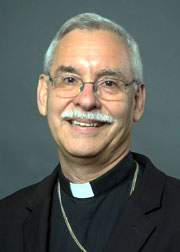
Bishop Taylor
Actions speak louder than words. Some of the words that you and I pray every day are: “Thy will be done, on earth as it is in heaven.” We pray these words in every Mass and in every rosary, most of us pray these words when we get up in the morning and again at night when we go to bed: “Thy will be done on earth as it is in heaven.”
To what extent is God's will done in heaven? Completely, right? So, we are praying that God's will be done completely here on earth as well. But notice: when we say those words, we're not just expressing a wish in the abstract that God's will be done; we're instead committing ourselves to a course of action. It doesn't do us much good to say we want God's will to be done if we're not trying our best to do God's will ourselves. Actions speak louder than words.
A sinful past was no excuse. Lack of schooling was no excuse. Both of these can be remedied.
In today's Gospel, Jesus begins his public ministry. Our text says that when he learned of John the Baptist's arrest, Jesus began to preach: “Repent, for the Kingdom of Heaven is at hand.” He set out to do God's will completely, knowing full well that one day — like John the Baptist — he too will be arrested and put to death. And then he calls Peter and Andrew, James and John, his first disciples, saying to these four fishermen: “Come after me and I will make you fishers of men.”
And what did they do? They left everything: their boats, their families, their careers and followed Jesus because in Jesus' call, they discovered God's will, and they realized that to do God's will completely, they'd have to leave everything else behind.
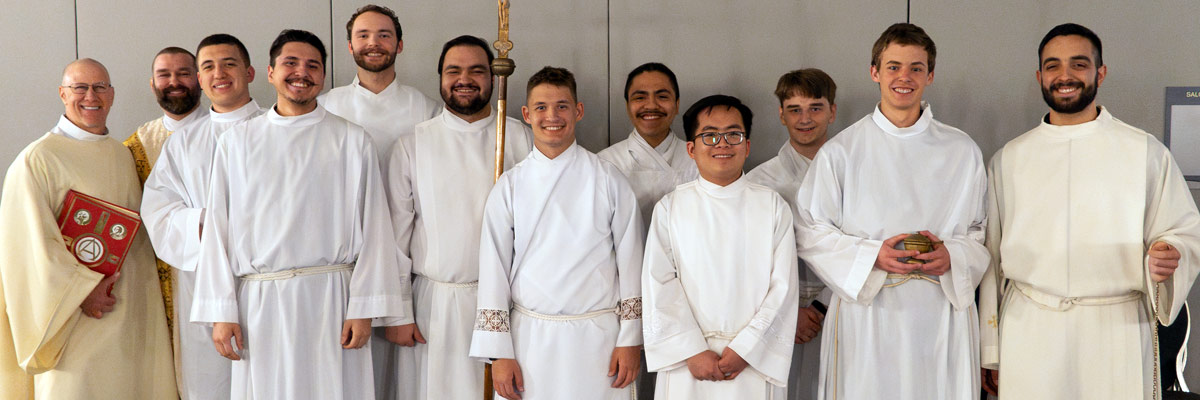
Given this Gospel reading today is a good day for us to pray for vocations to the priesthood and religious life. And not only to pray for vocations, but also to take action, to do something to encourage more single young people to listen prayerfully to the voice of God in their own hearts and to be open to the possibility that God may be calling them to this to follow Jesus and serve God in this powerful and special way.
We have just heard Matthew's account of the beginning of Jesus' ministry and the vocation story of his first four disciples. He called, and they responded.
In Luke's version of this story, we learn that these disciples felt unqualified. Peter said, “Depart from me Lord, for I am a sinful man.” Elsewhere, we learn that Jesus' disciples were not only sinful, they were also uneducated. But Jesus calls them just the same.
A sinful past was no excuse. Lack of schooling was no excuse. Both of these can be remedied. He'll take care of their spiritual formation. All he asks of them at the moment is that they respond. He'll take care of the rest.